Creating a Field of Belonging
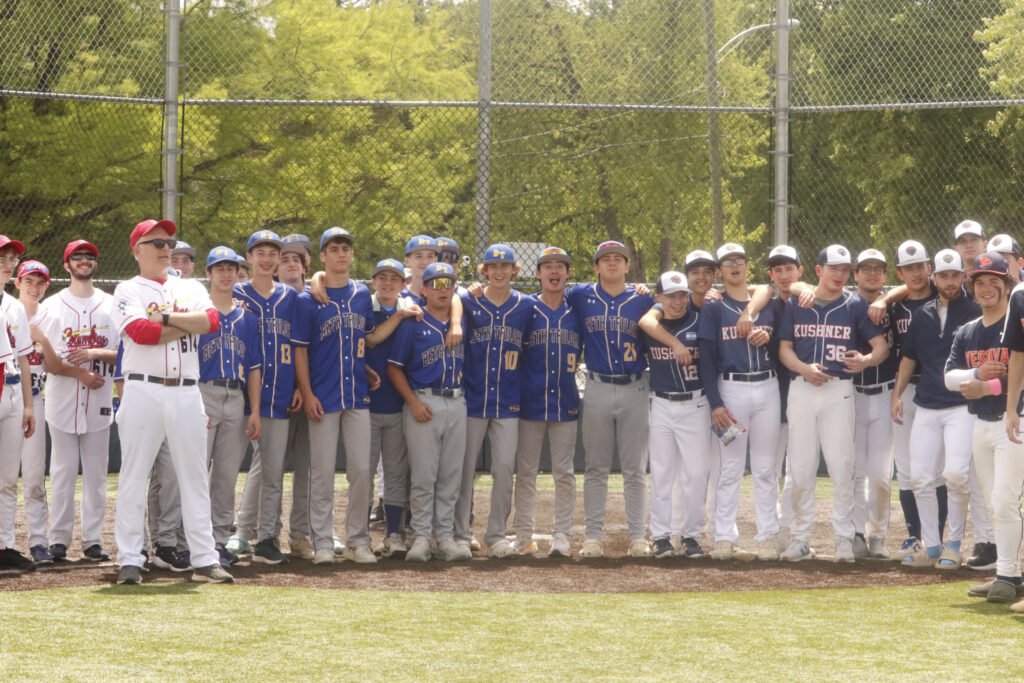
In Bet Shemesh, on a dusty stretch of ground between Tel Aviv and Jerusalem, a baseball field has been taking shape for a decade. Today it is mostly graded earth, some turf, and light towers. Soon, it will be the only regulation ballfield in Israel with a stadium to match: two thousand seats, dedicated youth diamonds, batting cages, dugouts, and room to grow.
That field is a promise. A promise that a child who has spent too much of the last several years alone and indoors, or in and out of bomb shelters, will have somewhere safe to go on a Sunday afternoon. So will a young adult just home from reserve duty. A team that expects them. A coach who knows their name.
That promise is what Les and Renee, and their son Jonah Sandler, are helping keep.
And if you ask Les why baseball, he starts with a worry that has little to do with sports.
He has watched too many people drift to the edges. “There’s a ton of people, quality people, that aren’t as involved,” he said of friends and neighbors who grew up Jewish but lost their thread to the community.
He has experienced two good friends die by suicide, after battling serious mental health issues. “That’s partially in the back of my mind,” Les said.
He shakes his head when talking about an incident that happened at one of his former businesses in Chicago, just a few months after he sold it.
“A 16-year-old shot and killed a 19-year-old. It’s just a tough world. You’ve got to do something for the kids,” he said.
Isolation. Mental health. Belonging. When Les talks about constructing a baseball field, he is talking about a place where a child can find teammates, a routine, and a reason to show up for people who depend on them. Baseball is the way in, but healthier kids are the goal.
“How can you look at a kid and say, we can’t help you?” he said.
A few years ago, Les joined the Federation’s Local Allocations committee, which distributes grants to Jewish organizations in Cincinnati, including the agencies caring for our community’s youth mental health. The committee work taught him to see the need up close and illustrated how a well-placed grant can provide life-changing results.
After October 7, the sharpest need he could see was in Israel: one national study found more than four in ten Israeli adolescents met the threshold for probable post-traumatic stress.
“It’s hard to solve any problem,” said Les, “and you see how much problems are escalating in the fields of mental health, especially in Israel.”
The field is part of a larger complex that Jewish National Fund has been developing for years as a national home for the game. The Sandlers made their gift through the Jewish Federation of Cincinnati, which is stewarding it to the project: a regulation field for young adult play, smaller diamonds for kids, and the stadium stands that turn a practice space into a place where community gathers.
That choice says something. Les likes “to direct my own fate,” as he puts it. He and his son Jonah built a small family entertainment business into an award-winning franchise. For many years, that meant giving back on his own. Then, committee work let him see how Federation operates: where the dollars go, what they build, who they reach. This gift is his verdict. Purposeful giving starts with a donor’s values and ends with real change, and Les trusted the Federation to connect the two. It also puts the gift squarely inside the community’s strategic plan, which calls for strengthening Jewish peoplehood and a sense of belonging, from Cincinnati to Bet Shemesh.
Completing the stadium is just the beginning. Les envisions it used year-round, tied to youth mental health care, and is already working to connect the effort with Enosh, Israel’s largest community mental health provider.
Add this story to Cincinnati’s “baseball town” history. Nate Fish, CEO of Israel Baseball Americas and manager of the Israel national team, played college baseball for the Bearcats. He and Les met by chance at an Alpha Epsilon Pi event on campus. “Nate told me about his dreams,” Les said.
Then Les did what he always does. He gathered people. He started the Israel Baseball U.S.A. Booster Club; its first gathering drew about sixty supporters looking, as Les put it, “to do something, not necessarily monetarily, but be a participant in something.” They get their chance soon.
On Thursday, July 16, the Mayerson JCC will host a community screening of Israel Swings for Gold, the documentary about Team Israel’s run to the 2021 Tokyo Olympics and the antisemitism the players met and overcame on the world stage, finding pride and unity in their shared Jewish identity. Fish and Israel national team coach Dan Cohen will be there to talk about what is next for baseball in Israel, including the Bet Shemesh stadium, and to take questions after the film.
Team Israel hopes to reach the 2028 Olympics in Los Angeles. It is a long shot, and the program’s own leaders call it a dream that shows Israeli kids how far the game, and they, can go. The nearer goal is already in motion: a field, a season, a team, a place where young players can find belonging, open for whoever needs it next. That is Les, Renee, and Jonah Sandler’s gift.
