We Are the Story Bearers: Why Taking Student Leaders to Israel Matters Now
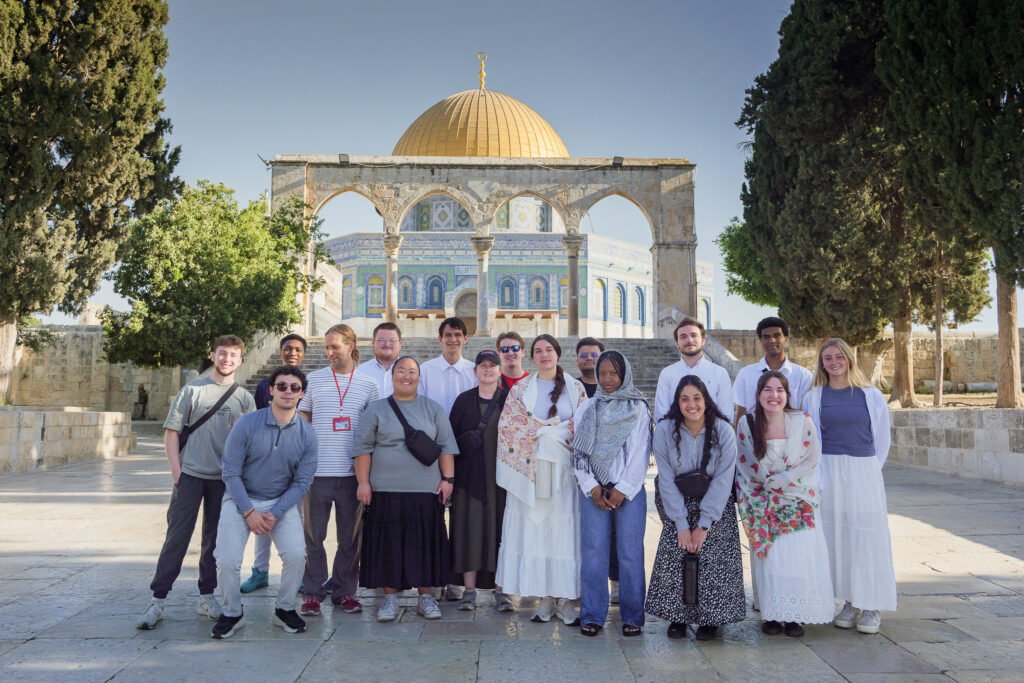
I just returned from Israel carrying stories that are impossible to ignore. I was there with Hillel International on a program called Sipurim, Hebrew for “stories.” The name could not have been more fitting. We were not there as tourists or observers. We were there to listen to people whose lives were irrevocably changed by October 7—and to carry their stories forward. We were story bearers, entrusted with carrying the voices of those whose lives were forever changed by October 7.
We sat with Rachel and Jon Goldberg-Polin, whose son Hersh was kidnapped by Hamas and later killed in captivity. In the face of unimaginable grief, they spoke with clarity and courage about what it means to be part of the story, not just to listen to it. “We are what we do,” they reminded us. Action matters. Bearing witness matters. Choosing to stay engaged, even when it hurts, matters.
Throughout the week, we met hostage survivors, Nova survivors, and families who lost spouses, parents, and children. We heard stories of terror, resilience, heartbreak, and hope. And while each story was unique, they all carried the same plea: Do not let our voices fade. As I listened to stories throughout the week, I felt something reignite inside me—a deep urgency to bring more students to Israel, not just to see the land, but to hold its stories.
At Cincinnati Hillel, one of the most powerful ways we do this is through our Student Leadership Israel Program. This trip is intentionally designed for student leaders across campus, no matter their religious background, ethnicity, or political perspective. If a student holds a leadership role at the university and has another year of school ahead, they are eligible to apply. We believe that those shaping campus culture should also be those encountering Israel in all its complexity.
On this trip, we don’t offer easy answers. We offer real people. Students meet Israelis from across the political, religious, and cultural spectrum. They sit with Palestinians and Jewish Israelis. They visit cities and border communities. They listen to voices that challenge them. And yes, they sometimes leave conversations unsettled. That’s the point.
Our goal is not agreement, it is understanding. Students learn how to engage with multiple narratives without erasing one for the sake of another. They learn how to listen without immediately rebutting. They learn that complexity does not mean chaos; it means humanity. And most importantly, they learn that Israel is not an abstraction or a headline, it is millions of real people living real lives.
So much of what students “know” about Israel today comes through social media, where algorithms reward outrage and flatten nuance. On our trip, students are invited into a different kind of knowing. They learn not what the internet wants them to see, but what people want them to understand.
What I was reminded of on Sipurim is that the people of Israel desperately want their stories held. They don’t ask for blind support. They ask for human connection. They ask to be seen. They ask not to be reduced to slogans.
And that is exactly what our students learn to do.
One student told me after returning from Israel, “I didn’t realize how much I didn’t know. But I also didn’t realize how much people would appreciate that we came to Israel to learn.” That is the heart of this work. When we bring student leaders to Israel, we are not exporting opinions, we are cultivating empathy, courage, and curiosity. We are training the next generation of campus leaders to lead with depth, not defensiveness.
In this moment, when Israel is so often talked about but so rarely understood, this work is not a luxury. It is essential.
As someone who now carries the stories of Hersh, of Nova, of families shattered and rebuilt by tragedy, I know this to be true: stories only live if we keep telling them. And students only learn to carry them if we give them the chance.
If you are passionate about Jewish life, campus leadership, and a future where young people can engage Israel with honesty and compassion, I invite you to be part of this work.
