Summerfair Continues Amid a Changing Coney Island Landscape
Summerfair looked different this year, but its creative spirit remained intact.
Long associated with the Old Coney grounds, the fine arts and crafts show returned in a more compact form as major changes continue across the property. The former Coney Island site is being transformed into the Farmer Music Center, a $160 million live-entertainment campus operated by a subsidiary of the Cincinnati Symphony Orchestra. With construction reshaping familiar surroundings, this year’s Summerfair occupied a reduced footprint. Even so, the event still drew a good turnout, helped by great weather, shaded walkways, food vedors, and the kind of easily navigated booth arrangement visitors have come to expect.
Now in its 59th year, Summerfair remains one of Cincinnati’s enduring art traditions. The setting may have been smaller and less crowded than in previous years, but the organization behind the event still showed. Jill Conway, Summerfair’s president, along with volunteers, judges, and the board of trustees, helped guide an event that continued to feel orderly, welcoming, and focused on the artists. Music on the acoustic stage began later in the day, but the fair itself offered plenty to see before the first notes carried through the grounds.
According to the event program, Rich Blandford, a fellow Cincinnatian, created the winning 2026 poster design. His work set out to capture the energy and excitement of the annual art fair, a fitting contribution to an event that continues to connect Cincinnati’s creative community with artists from across the country.
That national reach remained visible in the exhibitor booths. Artists working in ceramics, metal, fiber, glass, mixed media, and other disciplines filled the fair with work that ranged from decorative to highly functional. Summerfair’s purpose also extends beyond a single weekend. The event supports high school students, emerging artists, exhibitions, and the wider appreciation of fine art and craftsmanship.
Among the exhibitors, Classic Glass by David W. Bordine of Bay Village, Ohio, stood out with an impressive display of glass art. His booth included kaleidoscopes, dragonflies, sailboats, and other finely crafted pieces that caught and shifted light as visitors moved past. During a conversation at his booth, Bordine described one sailboat piece as a tribute to the winner of a Sailing World Cup event, adding a personal story to the work’s visual appeal.
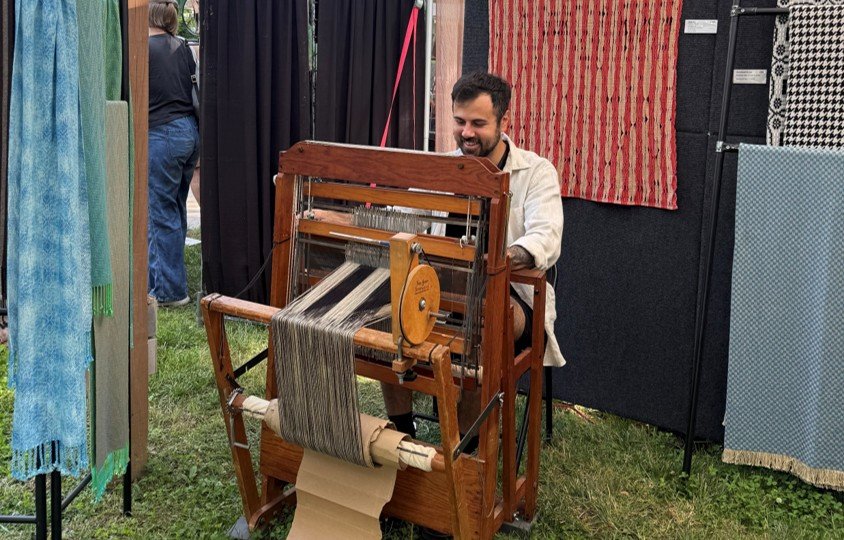
Another memorable moment came at the booth of Mehmet Kesimli of Joelton, Tennessee, founder and designer at The Longest Thread. Kesimli, whose hand-woven Turkish towels and other goods reflect a textile tradition shaped by craft and function, received an honorable mention. As visitors walked by, he was busy at work on his loom, turning the booth into more than a display space. It became a small demonstration of process, patience, and skill.
Those moments helped define this year’s fair. Summerfair was not only a place to buy art, but also a place to see the labor and imagination behind it. In a year when the grounds themselves were visibly changing, that mattered. The event’s smaller size could have made it feel diminished. Instead, it gave some booths and artists room to be noticed more closely.
For those who missed Summerfair last weekend, the connection to the artists does not have to end with the event. Contact information for fine arts and crafts exhibitors, along with sponsor information, is available through Summerfair’s website.
Coney Island may be entering a new chapter, but Summerfair’s 2026 edition showed that a Cincinnati tradition can adapt without losing the qualities that made it worth returning to in the first place: strong organization, approachable artists, careful craftsmanship, and the pleasure of walking through a place where creative work is not only displayed, but made.
