In the Beginning …
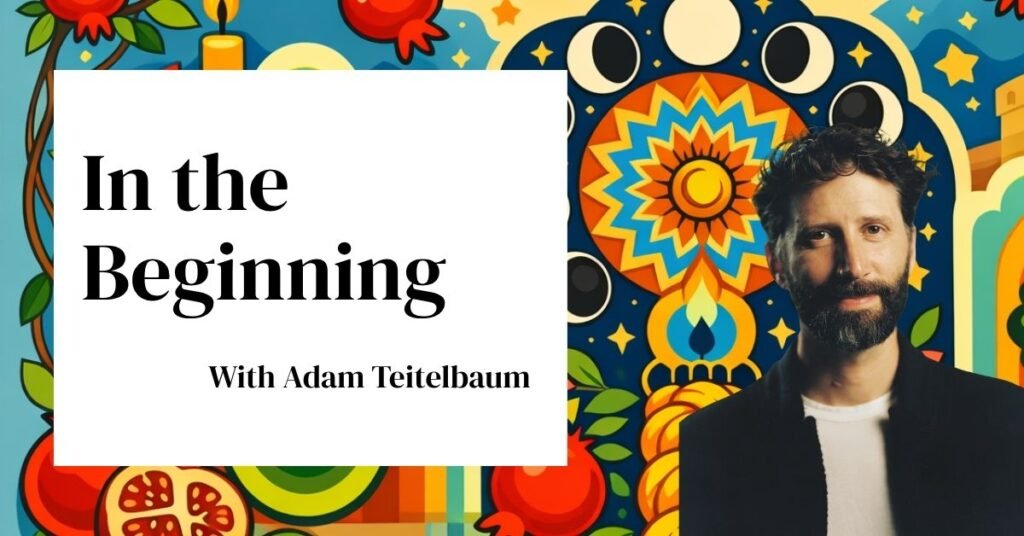
This week marks the start of a new Torah cycle — Bereishit, “In the Beginning.” It’s also the perfect place to begin a year-long study of modern fatherhood through ancient wisdom.
Each week, I’ll share reflections rooted in the weekly parsha—connecting timeless ideas to fatherhood, masculinity, and the work of building a life that matters. Each piece will be brief, deliberate, and worth your time. Even if you’re not a father, I think you’ll find value in these ideas because you’re a mentor and life is a journey to refine, teach, refine, teach. That’s a responsibility we have to one another regardless of genetics or gender. To teach we must model. To model we must witness, to know HOW to witness. These ancient ideas are about being human; about creating and teaching, leading and learning, and finding meaning in the messy, miraculous work of life.
The teaching goes there are seventy faces to the Torah. I believe that Torah is as relevant and unique to the individual reading it. For me where I am personally, as well as professionally, I’m reading our foundational text through this lens of Fatherhood first. Because it’s personal.
I’m the father of two (B”H soon three) young children. They have re-taught me how the world works — and how easily we forget. The daily chaos of parenting hides a simple truth: growth happens through repetition.
This lens also inspires me because the Divine is also a father, literally and metaphorically. In the opening lines of creation, G-d doesn’t set the world in motion and walk away. He stays involved. That act—creating and sustaining—reveals a fatherly dimension, even as it holds the maternal. Our spiritual lives mirror that balance. My focus on the fatherly is not to exclude the motherly, but to examine a lens too often undernourished.
And because our purpose in this life is more than procreation. “Pru u’rvu,” to be fruitful and multiply, is the first mitzvah, commandment given to humanity. Yet, according to the Sefer HaChinuch, being fruitful is only half of it. U’rvu can also mean to be like a rav—a teacher. The goal is not merely to create life, but to cultivate meaning. To teach others how to live with purpose.
As we begin anew this year, each of us has a choice before us. Each of us is created b’tzelem Elohim, in the image of G-d. That means we hold immense creative and destructive potential: the power to bless or to wound, to teach or to mislead.
Physics tells us that for every action, there is an equal and opposite reaction. The same is true in moral life: the higher our capacity for good, the greater our capacity for harm.
We live at that intersection every day. According to this week’s parsha, the very first in the Torah, what ultimately shapes our path is the influence of parental figures in our lives. Cumulatively we are the legacy of our parents.
If the spark of creation begins with the Divine, the echo continues through us. Parents are not merely caretakers; we are co-creators of the future. “Be fruitful and multiply” is not about numbers. It is about nurturing. Raising lives that carry forward wisdom, decency, and purpose. The purpose of life is to bring new life into the world as an act infused with divine responsibility and to teach that next generation what it means to be good. That is fatherhood. That is parenthood. That is partnership with the Divine.
Try to put this into action this week and honor your teachers. Start the new year with gratitude and share it with that person directly in some way. Reach out to someone who shaped you—a parent, mentor, rabbi, or friend—and thank them. Recognizing those who taught you strengthens the chain you’ll one day extend.
Each week, I’ll explore these intersections: ancient text, modern life, and the practice of becoming better fathers, partners, and men.
Thank you for joining me in the beginning.
