At Z3 Cincinnati, Young Jews Aren’t Walking Away—They’re Asking Hard Questions
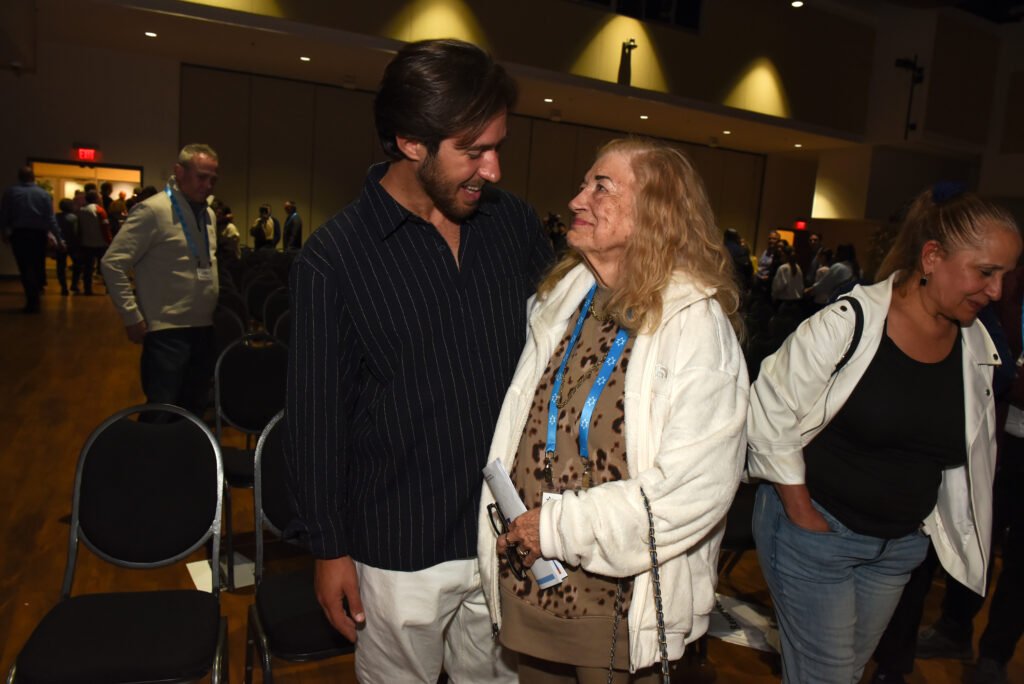
One of the hallmarks of Jewish culture is open communication. Furthermore, it is asking hard questions and being willing to hear the answer, even if you don’t agree. This ability to ask, listen, argue, and eventually agree to disagree was on full display at the inaugural Z3 Cincinnati Conference. In Keynote speaker Zack Bodner’s presentation, he emphasized the need for a diversity of voices in order to make Zionism 3.0 (Z3) effective and long lasting. The Keynote panel between a republican and a democratic U.S. representative furthered this idea of open communication between opposing parties. At every step of the way, communication was at the forefront of everyone’s mind.
I attended the breakout session “Why Millennials and Gen Z See Division in American Jewish Communities – and What It Will Take to Move Forward Together”, which asked the question of why young American Jews increasingly view Israel in a negative connotation. Why are there so many young Jews who are vehemently opposed to the State of Israel?
The answer on everyone’s mind and at the tip of their tongues was, of course, social media. Speaker Shayna Kling stated multiple times throughout the session that Israel was not winning the PR war. The way Israel is presenting itself online has garnered some rather unfavorable opinions. It also doesn’t help, Shayna explained, that social media is the world’s greatest echo chamber. It is hard to find someone with a differing opinion from your own once the algorithm knows what you want to see. Something she kept repeating was that you cannot change someone’s mind in their comment section. Instead, Shayna goes out of her way to meet people with opposing views to her own in person to have an open discussion about their different opinions.
Of course, social media is only one piece of the puzzle. Charlie Covit described a distinct apathy towards Israel in many young American Jews. He said that while there are definitely those who vehemently oppose Israel, along with those who are in full-spirit support of Israel’s current actions, for the most part, people don’t care. They have no hope that the current or future government will take actions worthy of their support. Where there is no hope, there is no engagement. It is nearly impossible to make someone care about something they deem hopeless. And for many young American Jews, the situation in Israel is so hopeless, it is easier to not care about what happens at all.
Shanie Reichman went on to describe the events of a discussion held with anti-Zionists, asking what it is they are looking for and why they feel the way they do about Israel. Overwhelmingly, the young adults participating in the discussion said they felt lied to. They said they felt as though Israel’s messy past had been hidden from them. And then when they brought these concerns to family, friends, teachers, or rabbis, they were met with denial, resistance, and hatred. No one was willing to have an open, honest discussion with them. This, I believe, is the most important thing that was said all day.
It is important to understand that questioning Israel and the Israeli government is not the same as denouncing it or denying its right to statehood. As Jews, aren’t we taught to ask big questions? Admittedly, some big questions are easier to answer than others, but it is the hardest questions that will bring us the most connection.Open and honest communication is the only way we are going to bridge the gap between those who support Israel and those who do not. It is the only way we are going to come together as Israel and the Diaspora. It is the only way Millennials, Gen-Z, and the older generations will begin to see eye to eye. In his closing remarks, Charlie said that it is imperative that we raise young Jews who can ask big questions and hold multiple narratives at the same time. They will be able to have a love for Israel and a healthy skepticism towards its actions.
