Mimouna: One More Night
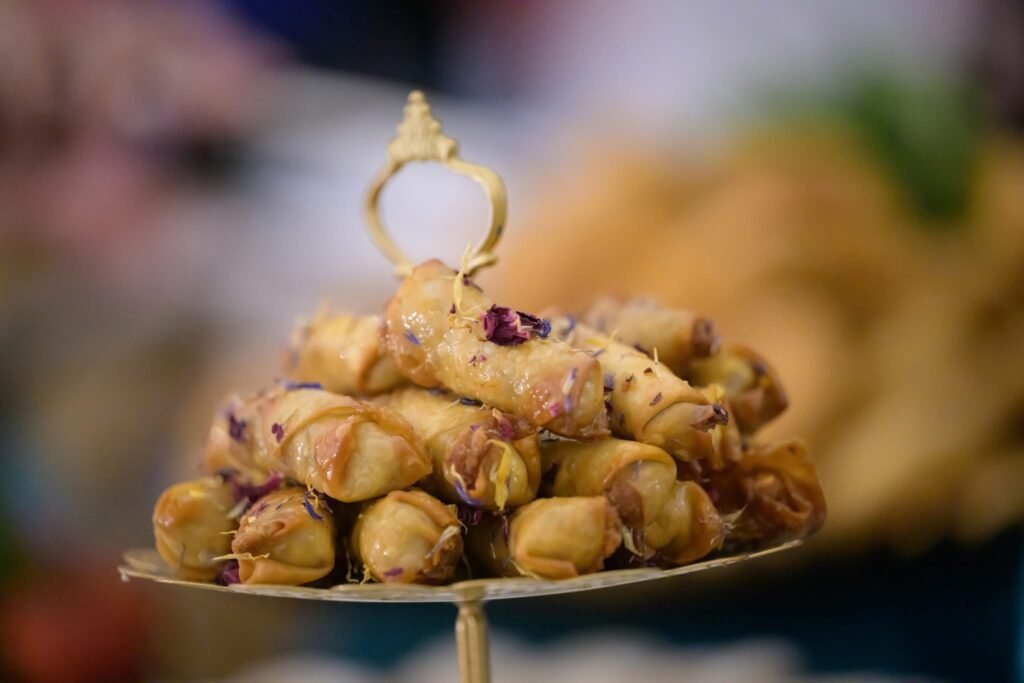
The moment Passover ends, something different happens in parts of the Jewish world. Homes open up, people start coming and going, and the night turns into something that feels like an extension of the holiday rather than the end of it.
Mimouna is a Moroccan Jewish tradition that takes place right after Passover. Friends, family, and neighbors stop by throughout the evening. There’s no real formality to it. You show up, you’re welcomed in, you eat, you talk, you stay as long as you want. The kitchen is active again after a full week of restrictions, and we make mufletta, a quick, easy, slightly oily flatbread, hot off the pan and gone just as fast. Tables are filled with sweets, nuts, pastries, and anything that brings a sense of abundance back into the home.
After a week without chametz, it doesn’t come back quietly. It comes back all at once, but in a way that feels earned.
What stands out to me is how natural the transition feels. Jewish life rarely moves in sharp endings. There’s usually a moment where one thing is ending while the next hasn’t fully begun. Every week we do this with Havdalah, standing between Shabbat and the rest of the week, and some continue with Seudat David HaMelech to hold onto that space just a little longer.
And while Mimouna isn’t quite an extension of Passover in the same way Seudat David HaMelech is, it lives in that same space, the shift from something holy back into the regular rhythm of the week.
Passover has that same rhythm. The Seder, the days in between, the final Yom Tov, and then right when it’s over, there’s still something left to do. Mimouna sits right there at that edge. It keeps the energy of the holiday going a little longer. People come over, food comes out, and no one is in a rush to leave.
This year we were blessed to have several places in our community celebrate Mimouna. Adath Israel hosted an event in their social hall, Cafe Alma opened their doors with an incredible spread of mufletta and desserts, and yours truly hosted what was probably the most Ashkenazi Mimouna ever. Listen, I did my best. It’s the spirit that counts.
I didn’t grow up with Mimouna. I’m as Ashkenazi as they come. But the more I think about it, the less interested I am in treating Jewish customs like they belong in separate lanes. We all come from different corners of the diaspora, and each community held onto its own traditions, foods, and ways of marking time. Now we’re in a generation where those worlds are meeting again, especially with a return to Jewish sovereignty in our homeland and the gathering of Jews from all over.
That comes with an opportunity, and I’d argue a responsibility, to bring those traditions into our own homes. Not to replace what we have, but to expand it.
So yes, there’s a Mimouna in my house. Yes, you’ll hear poteach et yadecha on a Friday night. Yes, I’ll even mix in a Yemenite “J” and an Ashkenazi “S.” It all belongs. It’s all part of the same story.
Mimouna may have started as a Moroccan tradition, but the idea behind it is something every Jew can connect to. You don’t rush out of something meaningful. You give it a proper close, surrounded by people, with a sense of gratitude for what just passed and a little bit of excitement for what comes next.
So I encourage you, add something in. Try a new Jewish custom. Bring in one more piece that connects you to another corner of our people. That’s exactly what we do in Israel. Sometimes one more night makes all the difference.
