Cincinnati 2030 Refocused: Choosing Jewish Cincinnati
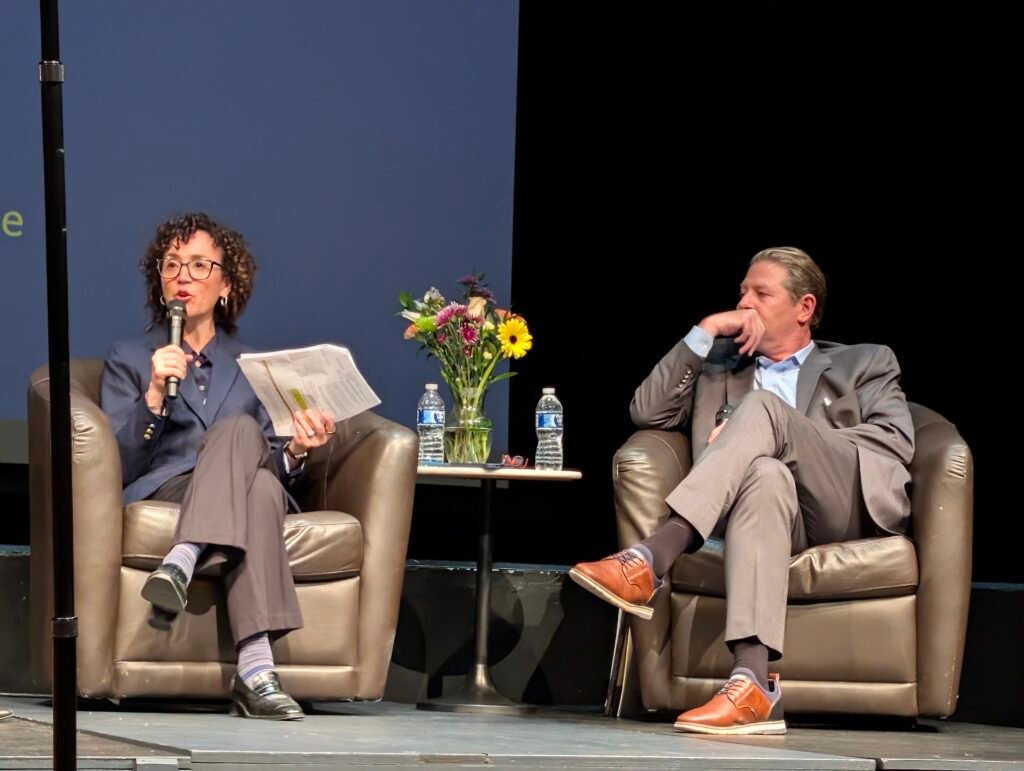
CINCINNATI – For many Jewish communities across the United States, the central challenge is no longer building institutions. It is providing clear pathways for engagement with them. That dilemma was the driving force behind the March 10th gathering at the Mayerson Jewish Community Center (JCC), where more than 100 leaders convened for a program titled “Cincinnati 2030 Refocused: From Aspiration to Action.” Leading the talk were Danielle Minson, CEO of the Jewish Federation of Cincinnati, and Brian Jaffee, CEO of the Jewish Foundation of Cincinnati—two institutions that, as Jaffee put it plainly, “are the two main institutional funders of this Jewish community.”
While the original Cincinnati 2030 plan was an expansive, aspirational look at what a flourishing community might look like, this refocused version is all about the “how.” It moves away from the traditional competition between institutions and toward a more modern, connected effort to make Jewish life feel accessible, relevant, and above all, the easy choice in an increasingly crowded world.
“When a Jewish family decides where to send a child to school, the choice isn’t between one Jewish school and another,” Minson said. “It’s between Jewish education, public education, and everything else.” This “everything else” competition is exactly why the refocused plan is zeroing in on making Jewish life feel like a natural fit for busy lives.
Since the events of October 7, there has been a surge in Jewish pride and a renewed desire for connection. “We know that post–October 7, people are certainly proud of their Jewish identity,” Minson said. “When they want to connect, we need to have engagement points ready for them.”
One of the biggest game-changers identified in this new roadmap is early childhood education, which both Jaffee and Minson described as a critical gateway for young families to find their footing in the community. “Early childhood education is an important entry point for families into Jewish life,” Jaffee said. Minson echoed that view, “If we could have more kids going to early childhood schools, that would be a game changer for Cincinnati,” noting the potential to spark a life-long engagement with the Jewish Community.
This focus is part of a three-pronged priority list that also includes economic resilience—ensuring Jewish life remains affordable and sustainable for families—and strengthening a deep sense of belonging. According to Jaffee, these priorities weren’t pulled out of thin air; they were shaped by a mix of community feedback and hard data to ensure the plan actually reflects the real-world needs of people living in Cincinnati today.
Still, key elements of the plan remain under development. Specific funding allocations, timelines, and performance metrics have not yet been finalized, and officials said those details will be shaped through consultations with agencies, congregations, and other stakeholders in the coming months. Minson said the effort will need to appeal to the broad and pluralistic population of Jewish Cincinnati in order to succeed.
In the end, the success of Cincinnati 2030 Refocused may not depend on any single program or initiative. It will depend on whether the community can create conditions that make participation feel natural and accessible—so that choosing Jewish Cincinnati is not a difficult decision, but an obvious one.
