Avi Mayer: A Man Between Two Countries
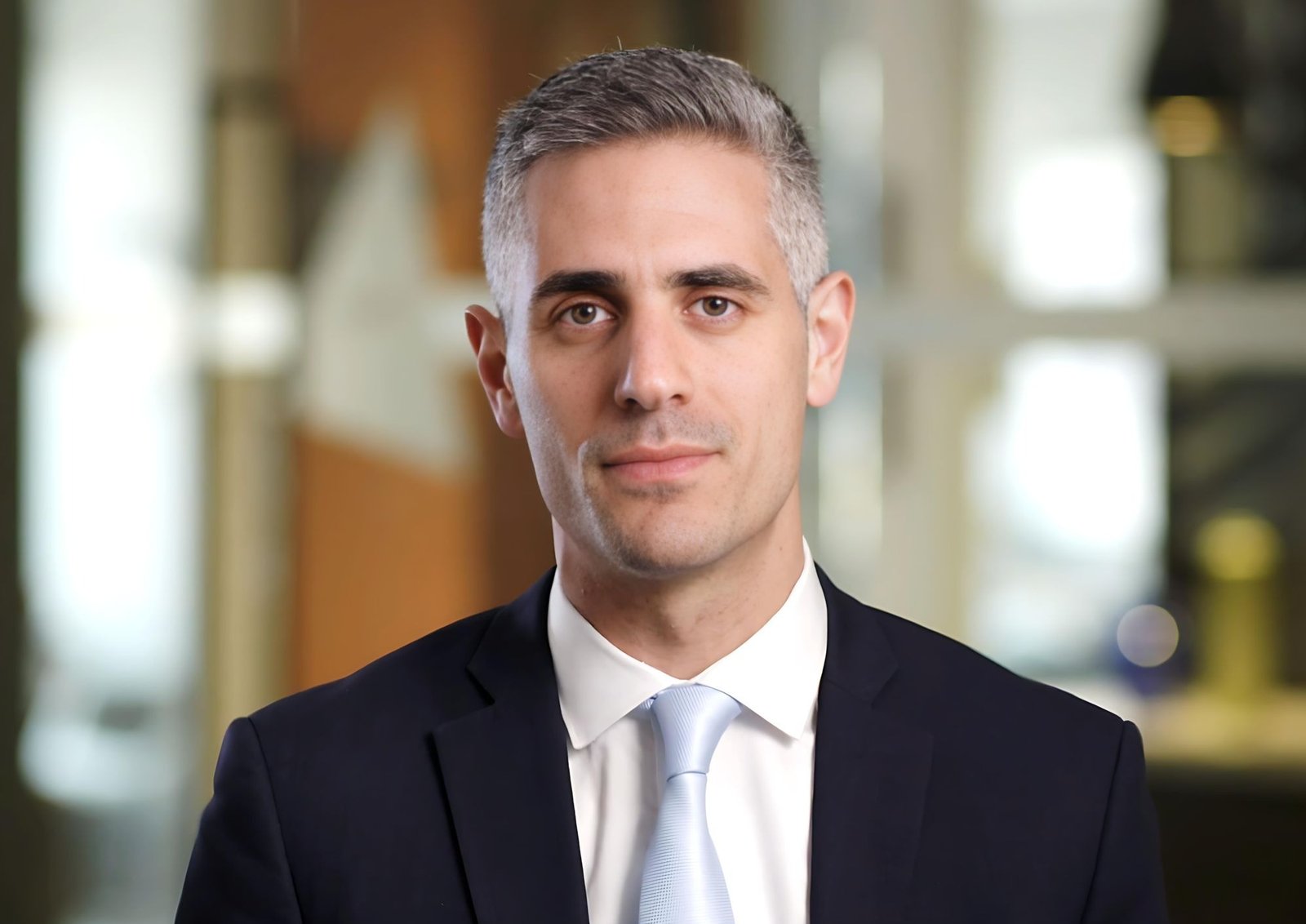
As I opened my conversation with Avi Mayer, he told me about a cat that lived in his neighborhood. “We’re in an open relationship,” he said, settling into his seat at Cafe Alma, Pleasant Ridge’s Israeli bistro. “I feed him, but I don’t think we’re exclusive.” He said it with the timing of someone who has learned that a dry sense of humor can take you surprisingly far in life.
Mayer is the immediate past editor-in-chief of the Jerusalem Post, Israel’s most-read English-language newspaper. He recently launched the Jerusalem Journal, a platform focused on Israel, the Middle East, and the Jewish world. As one of the most influential Jewish voices on X, his audience reaches into the tens of millions each month. That influence has afforded him unusual access, including conversations with presidents, prime ministers, and many of the figures shaping the Jewish world’s future.
Sitting between us was Justin Kirschner, regional director of AJC Cincinnati, whose persistence deserves some credit for getting Mayer to Ohio in the first place. Bringing Israeli speakers to the Midwest has become increasingly complicated — daily life in Israel is routinely disrupted by war, reserve duty, and canceled flights. Yet Kirschner has made a habit of finding ways to bring important voices to Cincinnati. He leaned over before we began. “I’m just going to be here,” he said. “You have about thirty minutes before his next commitment.”
Earlier this year, I attended AJC Cincinnati’s Leaders for Tomorrow (LFT) Accelerator Program, which equips Jewish high school students with advocacy skills to use on campus as they encounter the protests, encampments, and ideological certainties that increasingly define parts of the university experience. One lesson surfaced repeatedly: know your family’s Jewish story. Know where you came from. Know what happened. Know why it matters. So that is where I began.
Mayer’s family story is, in many ways, a familiar Jewish story of the twentieth century. His mother came from a deeply Zionist family and, following the Yom Kippur War, volunteered on a kibbutz. His father was raised in a strongly Jewish home. They met in law school. “My parents brought me to Israel when I was two,” he said, “and we moved there before my sixth birthday.” He spent the rest of his childhood traveling between the two countries. America, he told me, had given his family “the most important thing of all: a refuge.” He said it without performance, the way people say things they have been thinking about for a long time.
Which country shaped him more, I asked? As it turns out, neither. “I feel more Israeli when I’m in America,” he said, “and more American when I’m in Israel.” Living between the two has given him a front-row seat to the misunderstandings each community holds about the other — and, he argued, a responsibility to help close the distance.
American Jews, he said, often underestimate how naturally Jewish life is woven into Israeli society. “In Israel, it’s easy to live a Jewish life — it’s set up that way. Life cycle events, the calendar, the schools — it’s all built around it.” American Jews, by contrast, must actively choose and sustain Jewish identity in ways many Israelis rarely have to consider. “It requires much more effort to live a Jewish life in America. That experience is unique to Israel.”
The misunderstanding runs in the other direction as well. Israelis, he argued, often fail to appreciate the richness and diversity of American Jewish life. “Jewishness is axiomatic in Israel,” he said. “The richness of Jewish life in America, the diversity of American Jewishness; these are largely foreign to Israelis.” Many only begin to understand what conscious Jewish identity actually requires, he noted, when they spend time in the diaspora themselves.
The waiter arrived, and Mayer paused to order a green juice. It was a perfectly ordinary interruption, letting a sense of complete normalcy settle over the table for a minute. But the break didn’t last long; as soon as the waiter stepped away, we delved right into October 7th.
When I asked Mayer what journalism covering Israel looked like before October 7th, he glanced down at his phone and then set it face-down on the table. “It feels like a completely different world,” he said. The questions then were about the nature of Israeli democracy, about domestic politics, about whether the judicial reforms would hold. Security, of course, was always present, but it had receded into the background of public conversation. “We had been deluded into believing we had the luxury of looking inward,” he said. “There was a sense that we were on a break from Jewish history.”
Israel, Mayer argued, had allowed itself to believe it could afford to think beyond security: that the defense budget could perhaps be trimmed, that resources could flow toward other national needs, that a new era of regional prosperity was arriving. “The incredible importance of security has emerged in ways that we couldn’t have predicted,” he said. And then there was the question of Washington. Before October 7th, support for Israel in the United States had long been understood as structurally bipartisan, but that floor has shifted. “Israel has become a wedge issue,” he said. “It has caused Israelis to ask difficult and painful questions about the United States as a long-term ally.”
On media, Mayer was precise and unsparing. He wrapped both hands around his glass as he spoke, “It’s a failure of reporting, insufficient oversight, and ideological bias,” he said. “What people fail to appreciate is the editorial process behind everything we consume.” Mayer mentioned that journalists covering the war embed themselves in an ecosystem of NGOs that are deeply hostile to Israel, and that hostility shapes what gets filed back to newsrooms. Editors, who bear responsibility for sifting fact from advocacy, bring their own views to that process. The result is something that compounds at every stage. “I tell my reporters that I never want to know what their opinion is on the thing they’re covering,” he said. “We’ve seen rampant journalistic malpractice, not just in the last two and a half years, but for decades.”
I asked him, finally, what gives him optimism. It was the last question before his next interview. He took a long sip of his green juice and sat back. “Israel is often a deeply divided society,” he said. “But they have proven they can come together when they are attacked.” What emerged after October 7th: the mobilization, the sacrifice, the generation of young Israelis who performed acts of heroism that most people had assumed belonged to an earlier chapter of Jewish history. All of that genuinely moved him. “That gives me optimism for Israel.”
And American Jews, he argued, had answered in kind. “It has been remarkable to see the extent to which American Jews have mobilized in organizations like AIPAC, Hillel, AJC.” The synagogue memberships that swelled. The Hebrew school enrollments that climbed. The people who showed up, in Cincinnati and everywhere else, hungry for something to do with the feeling that had woken up inside them. “They have been inspired to delve more deeply into their relationship with Israel,” he said. “That gives me hope; that the sense of peoplehood and shared destiny we have all felt over the past two years will tell us what is at stake, and what we can achieve when we are united. We can build an Israel that reflects the pluralist Jewish values we all hold.”
He checked his phone one more time. Kirschner caught his eye. His next interview was here. As we stood to leave, I found myself thinking back to the answer he had given earlier. More Israeli in America. More American in Israel. By the end of our conversation, it felt less like a personal observation than a mission.
The Jewish world today rests on two pillars: Israel and the American Jewish community. Each depends on the other. Yet October 7, the war that followed, rising antisemitism, and growing political polarization have all placed new strains on that relationship.That is why people like Mayer matter. It is why organizations like AJC invest so heavily in building relationships between the two communities. Their work rests on a simple premise: that American Jews and Israelis cannot afford to become strangers to one another.
As Mayer headed off to his next conversation, it struck me that this bridge is not an abstract idea. It is the story of his family, the story of his career, and, increasingly, the story of the Jewish people itself, and its his mission to make sure the bridge between them remains standing.
