Learning Musar at Adath Israel
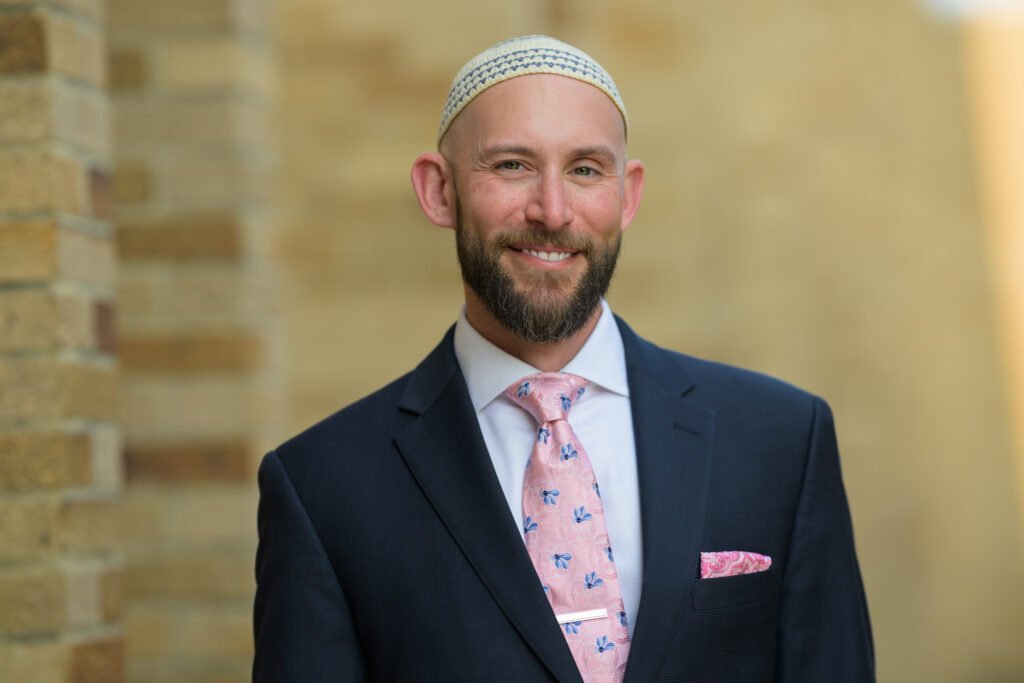
I so rarely get a chance to participate in a Torah study that I always jump at the opportunity. I especially look forward to the Mussar class at Adath Israel, led by Rabbi Scott Shafrin. He does a wonderful job breaking down the text in a way that I can understand and invites folks to ask lots of questions. Rabbi Shafrin’s love for teaching is so clear during these study sessions. He just knows how to walk people towards the answer in a way that doesn’t judge their journey there. Rabbi Shafrin is also happy to share that he doesn’t have all the answers. This honesty is another reason I love learning with him. He is always open to everyone’s interpretations and will always find something correct in it. For me, I want to leave a Torah study with more questions than answers because it means I understood the material enough to come think of more, and that always happens with Rabbi Shafrin. My only complaint is that the class is too short. I could easily learn for another two hours!
One thing that stuck with me during class was learning about how we are imitating the angels when we say “kadosh kadosh kadosh” (holy holy holy) during the Amidah. We raise our heels because it’s the closest we can come to floating like them. The Kedushah has always been one of my favorite blessings in the Amidah (probably because it was a bit of movement for a fidgety kid like me). I knew about the connection to the angels but hadn’t dived into why before. In all truth, it never really occurred to me that we are not imitating the angels every time we utter the word “kadosh” in prayer. For example, we don’t say the Kedushah during the Amidah in the Shabbat evening service, but we do say “Atah kadosh v’shimcha kadosh” (Holy are You and holy is Your name). This Mussar class helped me understand why we only raise our heels during the Kedushah, but it did leave me wondering why we don’t say the Kedushah in the Friday night repetition of the Amidah (but that’s a question for next time I see the Rabbi)!
Something that continues to endear me to Rabbi Shafrin is how he removes gender from the text. At Adath, we don’t gender G-d, but Rabbi Shafrin brings this further. Most of the texts we look at refer to men because that’s who wrote them, and they were written in a time where “man” was sort of a catchall term. While he doesn’t edit the direct text in our source sheets, Rabbi Shafrin will do his best to de-gender the text when reading, changing “men” to “people” for example. As a non-man who loves studying Torah, this small change feels big. Rabbi Shafrin isn’t some performative ally proudly showing off that he “doesn’t see gender”; he just knows that simply changing a few pronouns will make everyone feel welcome. By making Torah study an accessible space for all genders to ask questions and learn about our Judaism, Rabbi Shafrin ushers us into the new year with a fresh perspective on prayers we’ve been saying our whole lives.
